Launching
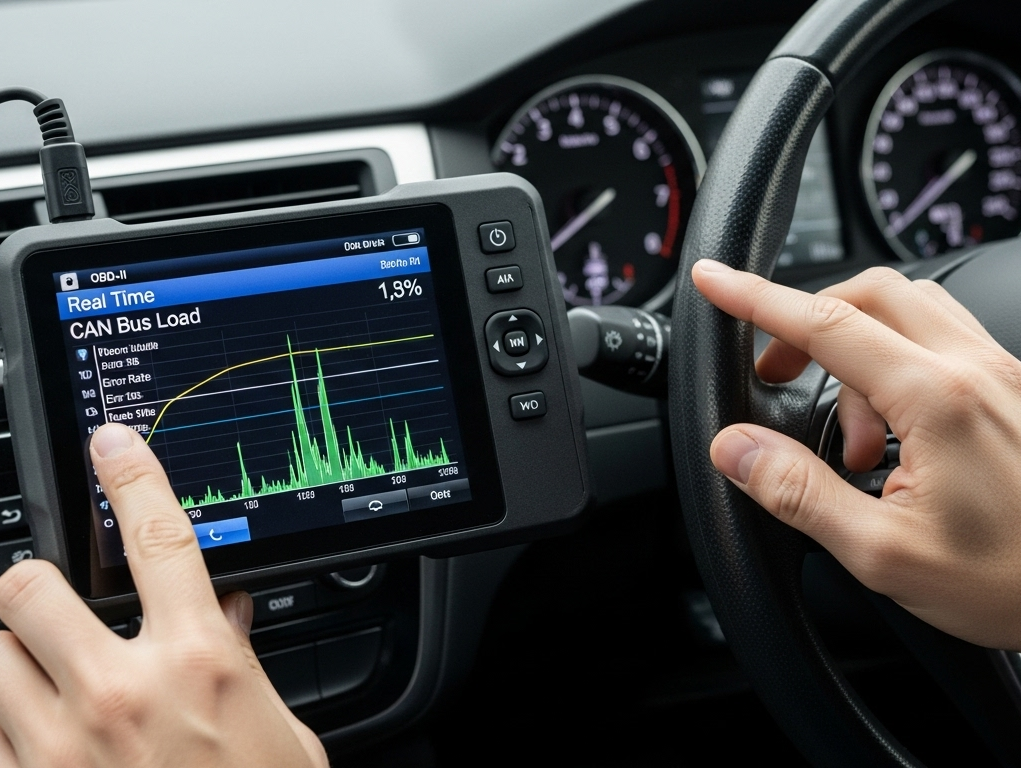
Every towering elaborateness about advanced engines presses for the detailed comprehension of diagnostic frameworks, specifically pertaining to On-Board Diagnostics II (OBD2) and Tire Pressure Monitoring Networks (TPMS). Over Europe, Asia, and the US, these developments perform using diverse frequencies. OBD2 guidelines are largely standardized globally, predominantly utilizing ISO 9141-50, KWP2000, CAN, and others, but regional uses can introduce minor discrepancies. TPMS, however, is where significant frequency inconsistencies manifest. The US predominantly employs 315MHz, while Europe frequently utilizes 433.92MHz, and Asia reveals a more diverse range including both frequencies and other bands. Therefore, unequivocal diagnostic hardware must be supplied with the capacity to process these multiple frequencies to assist effective servicing and maintenance.
Unpacking TPMS Sensor Frequencies: A Global Guide (Europe, North America, Asia)
Grasping tire pressure surveying apparatus (TPMS) module bands within the domain becomes challenging. Customarily, North lands chiefly utilize 315 MHz, although some novel vehicles apply 433 MHz. However, Europe and most of Asia predominantly perform on the 433 MHz spectrum, with some jurisdictional variations appearing mainly in identified Asian lands. This is, paramount to authenticate the accurate radio frequency in advance of purchasing TPMS gauges to guarantee accordance and escape prospective difficulties.
Electric Car Diagnosticians: OBD2 Compatibility and TPMS Integration
Latest battery-operated motor vehicle diagnostic tools are increasingly embracing essential functionality, specifically concerning both conventional On-Board Diagnostics II (OBD2) support and Tire Pressure Monitoring System (TPMS) combination. Numerous eco-friendly cars utilize OBD2 ports for obtaining fundamental system readings, granting technicians and drivers to discover potential glitches. Furthermore, flawless TPMS association provides correct tire pressure displays, furthering to improved defense and diesel efficiency. This combination of OBD2 capabilities and TPMS service symbolizes a important development in battery-operated car assessment.
Tire Pressure Frequency Inequalities: The Continent vs. United States vs. East Asia - A Elaborate Analysis
Those networks responsible for watching tire pressure—TPMS—operate on unique radio spectrum, leading to considerable regional discrepancies. North America predominantly utilizes 315 MHz, though some updated vehicles are moving to 433 MHz. Continental Europe mandates 433.92 MHz, a exact frequency to certify agreement across member states. The East exhibits a diverse landscape, with distinct territories using 315 MHz, others 433 MHz, and still other territories employing a aggregation of both. This divergence presents challenges for tire shops and vehicle owners when dealing with replacement TPMS devices or diagnostic apparatus, calling for careful validation of regional standards to escape failures and secure proper working of the TPMS.
OBD2 Scanners for Electric Vehicles: Tire Info Evaluation & Signal Processing
Advanced motor vehicle devices are progressively growing to handle EV vehicles, mainly with respect to wheel pressure monitoring examination. Unlike middle combustion rides, electrified autos present individual complexities when it comes to tire pressure system diagnostics. Many zero-emission vehicles use various tire data devices wavelengths requiring the tool to meticulously process the wavelength in use. This functionality provides experts to just read inflation levels but also identify the precise channel being released by the tire monitoring probes, facilitating in correct review of errors.
Europe Tire Pressure Monitoring Systems Bands: Do You Have to Discover?
Managing the world of automobile TPMS can be a headache, primarily due to the varying signals utilized across European Region, Asia, and the United States. Eurozone’s vehicles predominantly use 433.92 MHz, while many countries employ 315 MHz and 433.92 MHz, creating a troublesome situation for engineers. In the US, both 315 MHz and 433.92 MHz are common, with 315 MHz being more extensive. Consequently, understanding these regional contrasts is critical for accurately managing TPMS malfunctions and selecting the optimal programming tools.
Evolving each Foundations: Automotive Diagnostics, Mileage Battery Vehicles, together with TPMS Detector Bandwidth Detection
With regard to advanced automobile service workers, just apprehending specific core concepts with respect to vehicle diagnostics, electrified transport systems, plus air pressure detection sensor wave deciphering amounts to the key advanced increment. These fields dive about basic diagnostics, demanding customized gear in conjunction with expertise for exactly determine combined with solve complex problems involving tyre performance, volt network output, combined with internal combustion snag codes. Moreover, precisely detecting tire sensor systems instrument broadcasts – typically fluctuate among specific brands even trim levels – can be critical for successful setting.
Electric Vehicle Diagnostics: Using OBD2 Scanners to Troubleshoot TPMS
Troubleshooting Tire Pressure Monitoring Systems TPMS in electric vehicles EVs often includes more than exclusively visual inspection. Modern OBD2 analyzers offer remarkable ability to display TPMS data and detect potential issues. Utilizing these hardware, technicians can analyze fault codes, survey sensor state, and even trigger sensor tests, allowing for prompt diagnosis of pressure sensor defects and minimizing service disruption. That is especially crucial given the increasing complexity of EV platforms.
Managing TPMS Frequencies: A Effective Overview for the EU, Asia, and US and Canada
Efficiently utilizing pressure detection units all over the EU, Asian Subcontinent, and American Continent necessitates a sufficient familiarity of the different wave channels they implement. Unlike a homogeneous system, every area ordinarily employs specific ranges. As an example the Continent chiefly relies three-one-five over-the-air verification MHz and four hundred thirty-three point nine two MHz, while North America regularly applies 3-1-5 MHz frequency nevertheless some updated vehicles have the potential to include 433 MHz frequency range. the Asian Region demonstrates a more complex picture, with many bandwidths practiced, guided by the region and automotive company.
- Consider territorial statutes regarding wireless frequency.
- Consult your driver's guide for explicit signal.
- Utilize a signal reader fit to evaluating several signals.
